

Quick answer
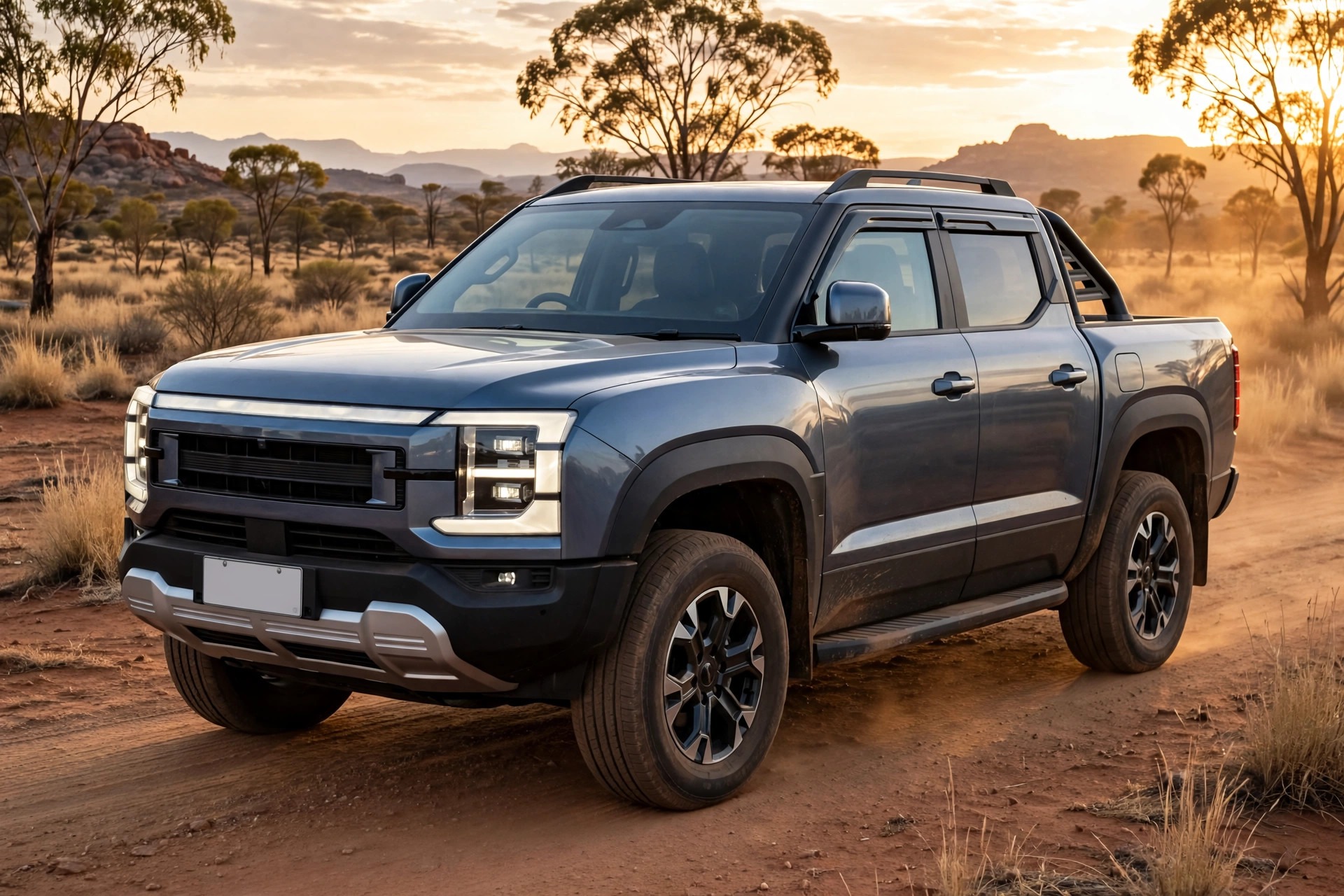
Yes, the BYD Shark 6 can tow a caravan in Australia — but the number on the brochure is the least important one. Three versions exist, and they tow very different amounts:
- Premium: 2,500 kg braked, 250 kg towball, GCM 5,750 kg
- Performance: 3,500 kg braked, 350 kg towball, GCM 6,650 kg
- Dynamic (cab-chassis): 2,500 kg braked, 250 kg towball, payload 900 kg (without tray fitted — deduct the tray’s weight once installed)
(Figures from BYD Australia’s homologation data, published by CarExpert. Kerb / GVM / GCM figures below are the same source.)
The real limit is the GCM — the maximum weight of your loaded ute plus your loaded trailer combined. Your setup must meet every vehicle, axle, towball and trailer limit. In these examples, GCM determines the remaining combined mass: at full tow weight, a Premium has about 540 kg left (theoretical remaining at max tow weight) for you, your passengers and all your gear.
The three numbers (and the maths nobody shows you)
Most English write-ups stop at “it can tow 3,500 kg”. That figure alone tells you almost nothing. Here’s what actually decides whether your rig is legal.
1. Tow rating vs GCM
The tow rating is the heaviest trailer the ute may pull. The GCM (gross combination mass) is the heaviest the combination may weigh. On the Premium, the arithmetic doesn’t add up the way you’d hope:
- GCM 5,750 kg − kerb 2,710 kg − full 2,500 kg trailer = ~540 kg left for driver, passengers, fuel top-up, canopy, tools and camping gear.
- On the Performance: 6,650 − 2,775 (kerb) − 3,500 (trailer) = ~375 kg left.
(Author’s calculation from the official compliance figures — the theoretical remaining at max tow weight; kerb weight excludes driver and cargo. Your actual limit is also bound by GVM, axle loads and towball weight, and accessories like a steel bullbar, canopy or drawers eat into the payload — subtract those first.)
Worked example: Premium + 2,400 kg van
Put numbers on it. Ute as loaded: kerb 2,710 + driver 85 + passenger 75 + fridge 25 + canopy 60 + bullbar 45 + camping gear 80 + fuel ~70 = 3,150 kg. Trailer 2,400 kg (within the 2,500 kg rating ✓). Towball ~240 kg (10%, within the 250 kg limit ✓) — and it counts against the ute: 3,150 + 240 = 3,390 kg vs 3,500 kg GVM ✓ (110 kg to spare). GCM: 3,150 + 2,400 = 5,550 kg vs 5,750 kg — 200 kg margin. Legal, but thin: add a second fridge and a roof-top tent and you’re over. That’s how the GCM trap works.
2. Towball weight eats your payload
Towball download (the weight pressing on the hitch) counts against the ute’s payload, not just the trailer’s. A 250 kg towball on a Premium with 790 kg payload leaves 540 kg for everything else — the same squeeze the GCM maths shows. This is why Australian caravanners talk about the “GCM trap”: checking only the tow rating is how rigs end up overweight at roadside weigh stations.
3. Versions matter
The early Premium tops out at 2,500 kg. The 3,500 kg figure belongs to the Performance variant only (2.0-litre turbo, 350 kW / 700 Nm system output, upgraded brakes and suspension). If you bought the launch car, your limit is the smaller number — check your compliance plate.
Before you hitch: a step-by-step checklist
- Weigh the combination, don’t guess. Load the ute the way you’ll travel (people, fridge, canopy, full fuel) and add the loaded trailer. Total must be under your version’s GCM; the ute alone under 3,500 kg GVM; the trailer under its tow rating. Public weighbridges cost a few dollars and settle every argument.
- Fit a brake controller — there’s no factory one listed. The Shark 6 doesn’t list a factory electronic brake controller, so plan on an aftermarket unit. In Australia, trailers with a GTM over 750 kg must have brakes; over 2,000 kg needs brakes on all wheels plus a breakaway system (which must hold the trailer’s brakes for at least 15 minutes if it detaches), and electric trailer brakes need an in-cab controller. Aftermarket units (e.g. Redarc Tow-Pro, Hayman Reese Guardian, or wireless Elecbrakes) are the standard answer — have it fitted by an auto electrician familiar with the Shark 6’s wiring. (Per Oz Canopies’ setup guide, which cites the BYD manual.)
- Check towball weight. Aim for roughly 8–10% of the trailer’s weight on the ball, within the 250 kg (Premium/Dynamic) or 350 kg (Performance) maximum — and remember it comes out of the ute’s payload.
- Plug in the 7-pin trailer plug (with the vehicle stationary). The Shark 6 detects the trailer and enters towing mode automatically. Expect: adaptive cruise control disabled (standard cruise returned with OTA 2.1 — see quirks below), AEB, lane-keep, blind-spot and rear cross-traffic alerts disabled, a speed limit (early reports put the towing-mode cap at 110 km/h; the BYD manual confirms a limit but states no figure), and NORMAL drive mode only. On vehicles with OTA 2.1, towing mode aims to keep the battery at roughly 50% charge — that is a target, not a hard floor: actual SOC fluctuates around the target, and the official OTA 2.1 details are unverified (behaviour may differ on earlier software — check your car’s version).
- Confirm your licence covers it. A standard car licence is enough in NSW and WA (Class C covers vehicles to 4.5 t GVM towing a trailer to 9 t GVM — the two states we checked). We did not verify QLD, VIC, SA, TAS, NT or ACT: trailer and licence rules differ by state, so check your own state transport authority’s current rules before towing interstate. Your actual combination is still bound by the car’s rated tow capacity, GCM, GVM, towball and axle limits.
- Check the spare-wheel recall. Before a long trip, ask a BYD dealer to check whether your VIN is affected by Shark 6 recall REC-006728, published on 21 September 2026. It covers 32,009 vehicles from model years 2024–2026 across all variants because the spare-wheel support cable may fail and let the wheel detach. If affected, contact a BYD dealer to arrange the free repair and follow BYD’s advice until it is completed.
The quirks: what owners actually complain about
Standard cruise returned with OTA 2.1; adaptive cruise remains unavailable
This was the single most-discussed towing complaint since launch: early cars disabled all cruise control with a trailer attached (CarExpert, January 2025, relaying distributor EVDirect). A carsales comparison published 29 November 2025 reported that OTA 2.1 enabled standard (non-adaptive) cruise control while towing — so updated cars have it, and only vehicles not yet updated still lack it. (Some owner guides still list cruise as unavailable — that reflects pre-update cars.) Check your own car’s software version before a long trip, and don’t buy an aftermarket plug that fools the trailer detection just to get cruise back — towing mode also adjusts stability and powertrain management, and bypassing it removes those protections.
What happens when the battery runs out?
The question every PHEV ute buyer asks. The Shark 6 carries a 29.58 kWh LFP blade battery (about 80–100 km of real electric range unladen). Towing at highway speeds can sharply reduce electric range; the effect depends on speed, terrain and trailer load. Once the battery is depleted, the 1.5-litre turbo petrol engine works as a generator, revving hard to keep the dual motors fed (engine speed varies with load — one test reported around 6,000 rpm holding 50% SOC with a 2,260 kg van). Electric assist is reduced but doesn’t disappear entirely. Real-world towing fuel use clusters at 17–20 L/100 km as a range of individual cases: carsales measured 17.4 (1.5T, ~2,400 kg van, ~200 kg towball), GoAuto saw 18.5 (2.0T Performance, 2,770 kg), and owner reports on Whirlpool/Reddit sit around 19–20 — roughly diesel-ute territory. Plan fuel stops like a diesel, not like a hybrid.
The ~50% battery target
On vehicles with OTA 2.1, towing mode targets roughly 50% battery — the car tries to keep reserve for the motors (below that, EV mode is also unavailable). That is a target value, not a guaranteed floor: actual SOC moves around it, and BYD’s official OTA 2.1 details are unverified. Behaviour may differ on earlier software, so check your car’s version. One owner reported the SOC setting locked between 50–70% with a trailer attached (single-owner case, not confirmed as a general rule). That’s by design (it protects hill-climb and overtaking performance), but it’s also why towing fuel use stays high: the engine starts generating early and often.
Speed limits while towing
BYD confirms towing mode imposes a speed limit, but the manual states no figure (early reports suggest around 110 km/h — unverified). Australia’s states add their own rules on top: in Western Australia, the lower of the posted limit and 100 km/h applies when towing. Know the rule for the state you’re driving in.
Who is the Shark 6 actually good for?
If your van is 2–2.5 t and your trips are weekends, not the Big Lap, the Premium is a strong package: the electric motors make towing feel effortless when charged, and the 6.6 kW V2L outlet runs your campsite. If you’re towing 3 t+ regularly across the country, be honest about the arithmetic — the GCM maths leaves the Performance about 375 kg of theoretical payload at full tow, and long battery-depleted stretches will drink like a diesel. The diesel Ranger and HiLux still win the “tows 3 t all day, every day” argument; the Shark 6 wins on purchase price, silence, and campsite power.
The one thing no brochure will tell you: tow the combination, not the trailer. Run the GCM subtraction before you buy the van.
Sources
- Weight/towing figures: BYD Australia homologation data via CarExpert specifications pages (2026 Premium/Performance/Dynamic); BYD Australia official Shark 6 page
- Towing setup, tow mode behaviour, brake controller advice: Oz Canopies BYD Shark 6 towing setup guide (citing the BYD owner’s handbook)
- Cruise control status: CarExpert (Jan 2025, via EVDirect); carsales PHEV ute comparison (29 Nov 2025, OTA 2.1)
- Fuel use: carsales tow test (17.4 L/100 km, 1.5T, ~2,400 kg van, ~200 kg towball); GoAuto review (18.5 L/100 km, 2.0T Performance, 2,770 kg); Whirlpool owner thread (~19–20 L/100 km, individual cases)
- Battery-depleted towing: farmmachinerysales tow comparison (~6,000 rpm holding 50% SOC with 2,260 kg van)
- Brake rules: National Caravan & Recreational Vehicle Towing Guide (PDF); Practical Motoring on brake controllers
- Licence: WA licence classes (Class C: vehicles to 4.5 t GVM, single trailer to 9 t GVM)
- Spare-wheel recall: REC-006728 (published 21 September 2026, 32,009 vehicles, MY2024–2026)
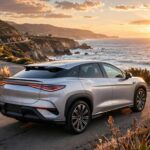
Photo: © Ethan Llamas / Wikimedia Commons / CC BY-SA 4.0
Related reading: BYD Dolphin Driver Assistance Warnings: What You Can Actually Turn Off (the same family of driver aids that towing mode disables), Haval Jolion Hybrid 12V Battery Drain: 5 Owner Questions Answered (hybrid battery behaviour when the 12V side goes flat).
[…] BYD Shark 6 Towing in Australia: Real-World Guide — another long-haul Australian BYD guide, this time with a trailer. […]