
You wake up, press the start button on your Haval Jolion Hybrid, and… nothing. No crank, no ready light, maybe just a sad flicker on the dash. Your first thought might be the hybrid battery died. Before going there, check something far more mundane: the small 12V auxiliary battery. A flat 12V auxiliary battery is one possible cause worth checking when a Jolion Hybrid won’t start — and it’s easy to misdiagnose at first glance, because the symptoms look like something more serious. Here are the five questions owners really ask, answered with the official owner’s manual as the backbone.
Q1: Where is the 12V battery? I’ve been looking under the hood
Stop looking under the hood — it isn’t there. On the Jolion Hybrid the 12V battery lives under the luggage-area cover plate, beneath the boot floor (the high-voltage hybrid battery sits under the floor too). That’s straight from the Haval Jolion 2026 owner’s manual (p245): “After taking out the luggage area cover plate, open the protective covers for the positive and negative terminals.” Independent road tests describe the same layout — drive.com.au’s 2024 Australian review of the Jolion Hybrid notes the hybrid battery and 12-volt battery sit under the floor, and New Zealand’s drivelife.co.nz describes the “main engine 12-volt battery… under the sub-boot floor area… in a rigid foam moulding.”
Why does this matter? Because some troubleshooting guides describe generic “jump points under the hood.” Per the factory manual, you clamp the jumper cables straight onto the battery terminals in the boot — that’s the procedure Haval documents. If another guide points you to the engine bay, check it against the manual before you trust it.
Q2: How do I know it’s the 12V battery and not the hybrid battery — or a dead key?
This is the fork in the road, and the manual gives you a three-way triage. The official symptoms of a drained 12V battery are: the vehicle cannot be started; the headlamps are darker than normal; the horn makes no sound or the sound is weak. If your lights are dim and the horn is a whisper, the 12V is the first suspect — but dim lights alone can’t rule out a low hybrid battery or another fault, so treat this as your starting point, not the final verdict.
Two imposters to rule out first:
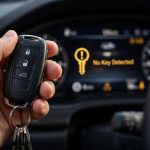
- A dead key fob. If the dash prompts you to check the key or the fob isn’t being recognised, try the manual’s emergency start: place the smart key at the marked position in front of the storage box and attempt to start (Haval Jolion 2026 owner’s manual, p111). If that wakes the car, a key-recognition issue is the likely suspect — which may be a spent CR2032 fob battery, but could also be another key-system fault, so don’t assume the fob battery is the whole story. Note that a successful key-rescue only addresses key recognition — it doesn’t exclude a 12V problem happening at the same time. We covered the full key-rescue drill in Haval Jolion Key Not Detected: Checks, Emergency Start & CR2032 Fix.
- A “Hybrid System Malfunction” warning with the car stuck in EV-only mode. Owner forums contain reports of a low 12V confusing the hybrid control electronics and triggering this exact warning after strings of short trips (unverified owner reports). Whether it clears once the 12V recovers is not something we could verify — so if the warning persists, don’t use it as proof that the hybrid system is fine. Get the car checked.
Q3: Can I jump-start a Jolion Hybrid myself — and what does the manual say?
Yes — the manual explicitly allows jump-starting, and gives a strict procedure (Haval Jolion owner’s manual, p245–246). Follow it in order:
- Open the boot, lift out the luggage-area cover plate, and flip open the protective caps on the positive (+) and negative (−) terminals.
- Connect the cables in this order: A dead car’s positive → B donor car’s positive → C donor car’s negative → D dead car’s negative.
- Start the donor car, raise the revs slightly, and wait about 5 minutes to put some charge into the flat battery before attempting to start the Jolion.
- If it starts, remove the cables in the exact reverse order.
The manual’s hard rules: the donor battery must be 12V, the cables must be at least 25mm² in cross-section, and never push-start or tow-start the car — hybrids must not be roll-started. Also expect the battery to vent gas while charging or jumping; keep sparks and open flames away.
One thing the manual doesn’t mention: portable lithium jump packs. The manual only describes a donor vehicle, so if you want to stay strictly within the factory procedure, use another car. Owner experience suggests a decent jump pack works, but that’s owner experience, not the book.
Q4: Why did my battery die after the car sat parked — or when I only drive short trips?
Short answer: the 12V system is constantly being sipped at, and short trips don’t always refill it. Here’s the mechanics (general hybrid knowledge + owner-forum experience). The 12V system powers the low-voltage electronics — door locks, alarms, infotainment standby, telematics. When the car is parked, those systems keep drawing power. In a hybrid, the 12V is topped up by a DC-DC converter from the high-voltage pack while the vehicle is in READY (drivable) state — the petrol engine doesn’t have to be running continuously, but the car does have to be on. The manual itself notes that short trips and city driving increase consumption while reducing the charge going back in, and that using electrics while the vehicle isn’t started drains the battery (2026 manual, power management section). Long stretches of only short runs can leave the 12V slowly sinking.
Heat makes everything worse — owners in hot climates have reported flat 12Vs after only days of parked summer heat (owner reports; we could not verify a general “one week” rule, so treat individual stories as anecdotes). And there is one data point worth knowing from owner forums: quiescent current draw, measured after the vehicle has fully gone to sleep, should generally be under about 50mA; noticeably more than that suggests something is keeping a system awake — a starting point for diagnosis, not a Haval specification.
One more check that costs nothing: pop the boot, open the terminal caps, and look at the battery posts. Loose or corroded terminals cause starting and charging trouble that mimics a dead battery — but they aren’t themselves the “parasitic drain.” If the 12V keeps going flat, the real diagnosis covers three things: quiescent current, the DC-DC charging system, and the 12V battery’s own health — an ageing or failing battery can keep dying even when drain and charging are both normal. That diagnosis belongs at an authorised service centre.
Q5: How do I stop this from happening again?
Five habits that help (manual guidance + general owner experience — not factory-prescribed schedules):
- Give it a proper run regularly. A longer drive lets the DC-DC converter do its job — a sensible general habit for drivers who otherwise only do short hops.
- Consider a trickle charger for long parking stints. If the car sits for weeks (airport, holidays), a 12V maintainer is cheap insurance — but check your battery type and the charger’s wiring instructions first, and confirm with your dealer if unsure.
- Keep the terminals clean and tight — a quick look when you’re already in the boot costs nothing.
- Know your warranty and roadside assistance. In Australia, GWM backs the Jolion with 7 years unlimited-km warranty; roadside assistance (typically 5 years, extended to up to 7 for vehicles sold from 1 July 2026 that are serviced at authorised dealers) covers a flat 12V jump — a phone call can save you buying cables. Market differences matter: South African owners should know GWM’s service guide says late servicing can affect warranty applicability or lead to pro-rata cover, so keep the service book spotless.
- Get recurring drain diagnosed. If the 12V goes flat repeatedly despite healthy habits, the manual says to have the car checked at an authorised service centre.
12V gremlins aren’t unique to the Jolion — our BYD Atto 3 12V battery guide walks through the same diagnose-before-you-swap logic on a different car.
A correct jump-start following the manual may well get your Jolion moving again. If it doesn’t start, or the battery keeps dying, don’t force it — call roadside assistance or an authorised service centre.
Sources: Haval Jolion 2026 owner’s manual pp245–246 (jump-start procedure, symptoms, safety rules), p111 (key emergency start), p196/p198 (battery warnings, power management); drive.com.au 2024 Australian Jolion Hybrid review & drivelife.co.nz (12V battery location); gari.pk owner Q&A (drain diagnostics, labelled forum experience); autotrader.co.za (SA warranty context); GWM Australia roadside assistance page; GWM South Africa warranty & service guide.
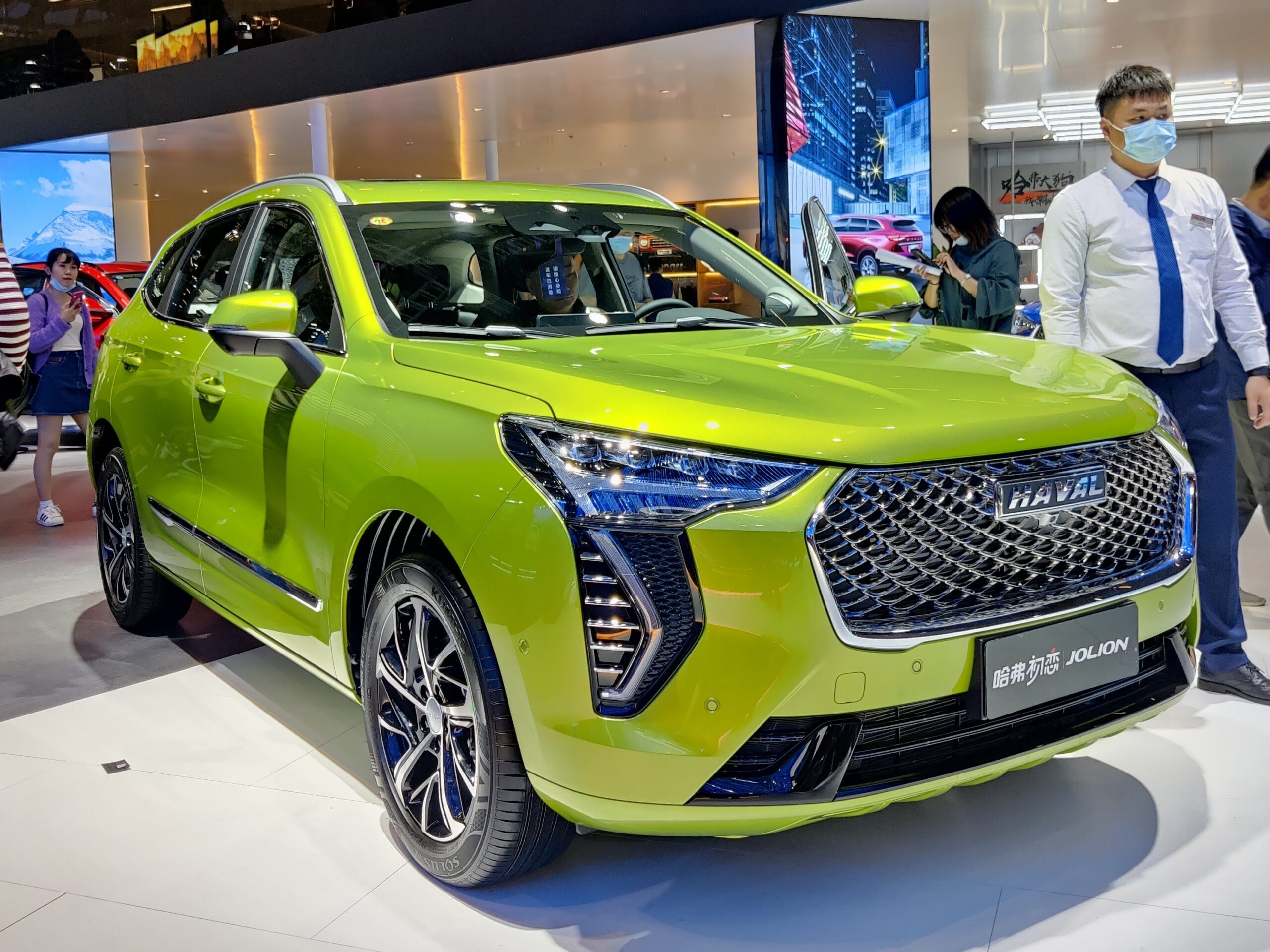
Photo: © JustAnotherCarDesigner / Wikimedia Commons / CC BY-SA 4.0