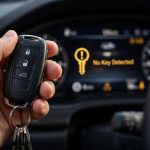

If your BYD shows around 10% battery — or even half a charge — and refuses to start, the Blade battery is probably not the first suspect. In the handful of owner cases cited in this article (UK and Australian owner groups, plus Malaysian and Australian forums), possible explanations raised include 12V auxiliary-battery faults and LFP state-of-charge display issues. In the DM-i hybrid case, an empty fuel tank was only a commenter’s unconfirmed theory. These are individual cases, not a survey of all no-start incidents. Some initial checks can be made without accessing high-voltage components; other faults require professional diagnosis.
Quick symptom guide: match your symptom
Before you call anyone, figure out which of these you’re seeing. They point to different possibilities raised in the cited cases:
| What you see | Possibility raised in the cited cases | What to do |
|---|---|---|
| Screens black, relays clicking, car stuck in Park, won’t shift | 12V system fault — flat/dead battery or loose terminal | Check the 12V terminals; jump start per your model’s handbook (the Atto 3 handbook recommends doing this under professional guidance); have roadside assistance or a workshop test the battery before replacing it |
| “EV power limited” / turtle icon, car barely moves | 12V fault or hybrid-system fault (one case was a failed coolant pump) | Call roadside assistance — don’t diagnose a powertrain on the hard shoulder |
| “Park your vehicle in a safe place. Power will be turned off soon.” at ~10% on a DM-i hybrid | One owner’s thread suggested an empty fuel tank; not confirmed | Check the fuel level; if the warning persists, contact assistance |
| % drops fast near the bottom, or the dash keeps asking to “charge to 100% for battery balance” | Possible SOC display/calibration issue (not confirmed) | Check your model and market’s handbook; the recommendations below are from the 2025 Australian Atto 3 handbook |
“My brand-new Sealion 5 showed 49% but was completely dead”
Natasha in the UK picked up her Sealion 5 on a Friday. By Sunday evening, with 49% on the dash, she had black screens, a continuous clicking noise, and a car stuck in Park so it couldn’t be pushed onto the tow truck. Commenters on her post (16 comments, 2026-08-03) suspected a 12V auxiliary-battery fault, but the post does not confirm the diagnosis.
The mechanism is straightforward: the 12V system powers the electronics that bring the car into a drivable state, and the Atto 3 owner’s handbook notes that if the low-voltage battery is too low, the vehicle may not power on. That said, a 12V fault tells you nothing about the health of the high-voltage pack — it can’t confirm the Blade battery is fine, either.
One detail from the comments is worth the price of the article: another owner’s car went dead on an incline because the dealer had never tightened the 12V lead properly from new — a pre-delivery inspection miss, fixed in minutes once spotted. So check the terminals first. One owner also reported a folk trick — lock the car, then press the driver’s door button about a dozen times, claiming it forces a 12V top-up — but it has no manual basis, nobody can confirm what it actually does, and you shouldn’t rely on it. If the official wake-up steps fail, follow your own car’s handbook and call roadside assistance.
“My 2023 Atto 3 sat through a 10-day holiday and the 12V went completely flat”
A UK owner’s 2023 Atto 3 (18,500 miles) came back from a ten-day holiday to a flat auxiliary battery; oddly, the car would turn on but then couldn’t be powered off. BYD’s emergency support — which the owner said was provided through the AA in the UK — jump-started it and declared the auxiliary battery had failed (post, 2026-10-15).
Other owners in the thread offered advice from their own experience: replace the 12V proactively after a couple of years (this owner’s failed within two), consider an AGM type, and carry a lithium jump starter. Take those as owner suggestions, not tested facts. One owner suggested keeping the key fob away from the car when parked; the mechanism is unverified. Some owners in the threads cited recommend carrying a jump starter.
For balance: in the MG owners group, a ZS EV owner reported her third battery-related failure in under two years (post), and another’s 12V drains if the car sits for two days (post). These reports illustrate individual 12V failures; they do not establish how common this cause is across Chinese EVs.
“My Seal loses 2–3% a day while parked and locked”
This UK Seal thread drew 37 comments (post, 2026-10-17). The most-liked theory in the comments was that a dying 12V battery was being repeatedly recharged from the traction pack while the car slept — and that replacing the 12V fixed the identical symptom on an Atto 3 whose battery was only a year old. Treat that as an unconfirmed owner theory, not a BYD-confirmed mechanism: the Atto 3 handbook does describe intelligent 12V charging from the high-voltage pack under certain conditions, but nothing confirms that this specific car’s daily drain came from that loop. It needs a workshop check on the actual car.
An Australian Shark 6 owner measured a similar parked drain from the other side — about 2.36 kWh lost per 24 hours parked — with other forum members offering the same 12V theory (Whirlpool thread). Again: plausible, owner-reported, unverified.
“My Dolphin keeps telling me to charge to 100% for battery balance”
The message is a charging recommendation and does not, by itself, establish a fault. The Atto 3 owner’s handbook (2025, Australian version) gives two separate charging recommendations for LFP packs: a regular full charge at least weekly, and a full charge from below 10% SOC once every three to six months. Those are that handbook’s recommendations for that model and market — don’t assume they apply verbatim to every BYD LFP car.
As general technical background (not a BYD-published diagnosis): LFP’s flat voltage curve makes voltage-based SOC estimation difficult; it does not establish why any particular car’s displayed SOC drifted. Battery University’s BU-903 notes EV state-of-charge readings can be off by 15%, with drivers running out of charge while the dash still showed 25%. We unpacked the calibration side in why LFP batteries need a weekly 100% charge. The Atto 3 handbook’s charging recommendations may help with SOC estimation; persistent warnings or no-start symptoms still need diagnosis.
“My Seal U DM-i hit 10% in EV mode and said ‘Power will be turned off soon'”
The closest literal match to the “10% shutdown” topic we found in the owner groups — and it was a hybrid, not a pure EV. On the motorway in EV mode, the battery dropped to about 10%, the dash warned to park safely because power would be turned off soon, and the car wouldn’t switch to HEV mode (post, Bijay Jung Thapa, UK, 2026-08-30). The top-voted comment suggested he had simply run out of petrol. That’s one commenter’s theory, not a confirmed diagnosis — but it’s worth checking the fuel gauge in this situation. If the car still won’t switch modes or the warning persists, contact roadside assistance rather than assuming fuel was the whole story.
“My Seal U spluttered at 13% and had no power”
One more low-SOC data point: a UK Seal U spluttered to life with an engine warning, then after a restart showed fine — until the accelerator produced high revs and barely any forward motion (post, Michael Powis, 2026-04-07). One owner with similar symptoms left the car for an hour and it recovered by itself; another identical case turned out to be a failed coolant pump, fixed by the dealer in two to three days. The practical takeaway: at low SOC with a turtle icon and no power, call roadside assistance. (Terms vary by market — BYD Australia lists 12 months of complimentary roadside assistance for vehicles delivered from 22 July 2025; the UK owner in the thread above was recovered by BYD’s emergency support, which they said was provided through the AA.)
If it won’t start right now: the emergency sequence
These steps come from specific handbook versions — check your own car’s handbook, because terminals and procedures differ by model, year and market. The jump-start details below are from BEV handbooks (Atto 3, Dolphin, Dolphin Surf); DM-i models use a different power system, so DM-i owners should follow their own model’s handbook and not apply these BEV terminal details.
- Try the official wake-up first (Dolphin). The BYD Dolphin Owner’s Manual 2025 (right-hand-drive English version) describes a dormant/wake-up function: hold the smart key near the driver’s door and press and hold the microswitch for 3 seconds.
- Jump start from the correct terminals. On the Dolphin (same manual), the positive terminal is inside the under-bonnet PDB (power distribution box) and the negative goes on the bonnet latch. On the Atto 3 (Owner’s Handbook 2025, Australian version), the positive jump point is inside the under-bonnet PDB and the negative connects to an unpainted metal point on the motor assembly. The Dolphin manual is explicit: never jump start another vehicle from your Dolphin — that prohibition is about using your car as the donor, not about receiving a jump start at the specified terminals.
- After a jump start, keep the car running. The Dolphin Surf Owner’s Manual 2025 (European left-hand-drive English version) instructs: start the vehicle immediately after jump starting and keep it started for over 15 minutes, because the low-voltage battery may otherwise go dormant again.
- Know the limit of self-charging. The Atto 3 handbook’s intelligent charging can top up the 12V automatically while parked — but only while the high-voltage pack allows discharge and the 12V is merely low. “If the battery voltage is too low, it may not be able to power on the vehicle.” If the vehicle will not power on, the handbook says to contact an authorised BYD dealer or service provider promptly.
Prevention: keep low charge from ever becoming a problem
- Charge promptly when the battery is low. The Atto 3 handbook says to avoid operating the vehicle with low SOC for a long time, and notes that a dash showing 0 km of range means the SOC is low. Several cited posts describe symptoms at low displayed SOC, but they do not establish that low SOC caused them.
- Do both calibration charges. Weekly full charge, plus a full charge from below 10% SOC every three to six months (Atto 3 Owner’s Handbook 2025, AU). Details in our LFP calibration article.
- Don’t store it low. More than 7 days parked: keep 40–60%. More than 3 months: full charge, then back down to 40–60% — the handbook warns over-discharge damage from bad storage is not covered by warranty.
- New car? Check the 12V terminals are tight. A real owner found the dealer’s pre-delivery inspection had left them loose.
- Consider carrying a lithium jump starter. Owner advice, not an official recommendation, and it doesn’t replace the jump-start terminals and procedures in your handbook. Some owners in the threads cited recommend keeping one in the car. If your 12V does fail, our Atto 3 12V guide walks through the diagnose-before-you-swap decision.
Sources
Owner experience (individual cases, not statistics) — BYD Owners club UK (facebook.com/groups/874570097440019): Sealion 5 no-start at 49% (Natasha Beech, post, 2026-08-03, 16 comments); Atto 3 12V flat after 10-day holiday (post, 2026-10-15, 7 comments); Seal U DM-i “Power will be turned off soon” at 10% (Bijay Jung Thapa, post, 2026-08-30, 8 comments); Seal U splutter at 13% (Michael Powis, post, 2026-04-07); Dolphin “battery balance” message (Met Sea, post, 2026-10-14, 10 comments); Seal 2–3%/day parked drain (post, 2026-10-17, 37 comments). MG ZS Owners Club cross-reference (individual 12V reports). forum.lowyat.net Atto 3 “ev power limited” / locked-in-P thread (Malaysia, link). forums.whirlpool.net.au Shark 6 parked drain (Australia, link).
Manufacturer manuals — BYD Atto 3 Owner’s Handbook 2025 (Australian version): low-voltage battery intelligent-charging conditions; “If the battery voltage is too low, it may not be able to power on the vehicle”; SOC display may be inaccurate after first use or long idle — fully charge first; avoid long low-SOC operation; storage 40–60% beyond 7 days, full-charge-then-40–60% beyond 3 months, over-discharge damage not warranted; weekly full charge plus full charge from below 10% SOC every 3–6 months; jump-start terminals (positive inside under-bonnet PDB, negative on unpainted metal of the motor assembly). BYD Dolphin Owner’s Manual 2025 (right-hand-drive English version): dormant/wake-up (smart key near driver’s door, press and hold microswitch 3s); jump-start terminals (positive inside under-bonnet PDB, negative at bonnet latch); “Never jump start another vehicle.” BYD Dolphin Surf Owner’s Manual 2025 (European left-hand-drive English version): high-voltage pack tops up the 12V automatically at sufficient SOC; after jump starting, start the vehicle immediately and keep it started for over 15 minutes.
Technical explainers — Battery University BU-903 (link): flat LFP discharge profile makes voltage-based SOC estimation difficult; EV SOC readings “can be off by 15 percent”; cases of running out with 25% displayed. large-battery.com (link): 27–94% SOC spans ~0.07V on the plateau; the displayed % near the bottom is the least trustworthy. misenpower.com (link): flat plateau ~10–90% SOC. EV Briefs 2025-08-28 (link): weakest-cell voltage drop → BMS output cutoff — media analysis, not a confirmed BYD/BMS threshold. evparts4x4.com (link): EV relies on the 12V for its low-voltage systems. evpowerhouse.com.au (link): owner-report roundup. onefiniteplanet.org (link): calibration routine from a long-term Australian Atto 3 owner.