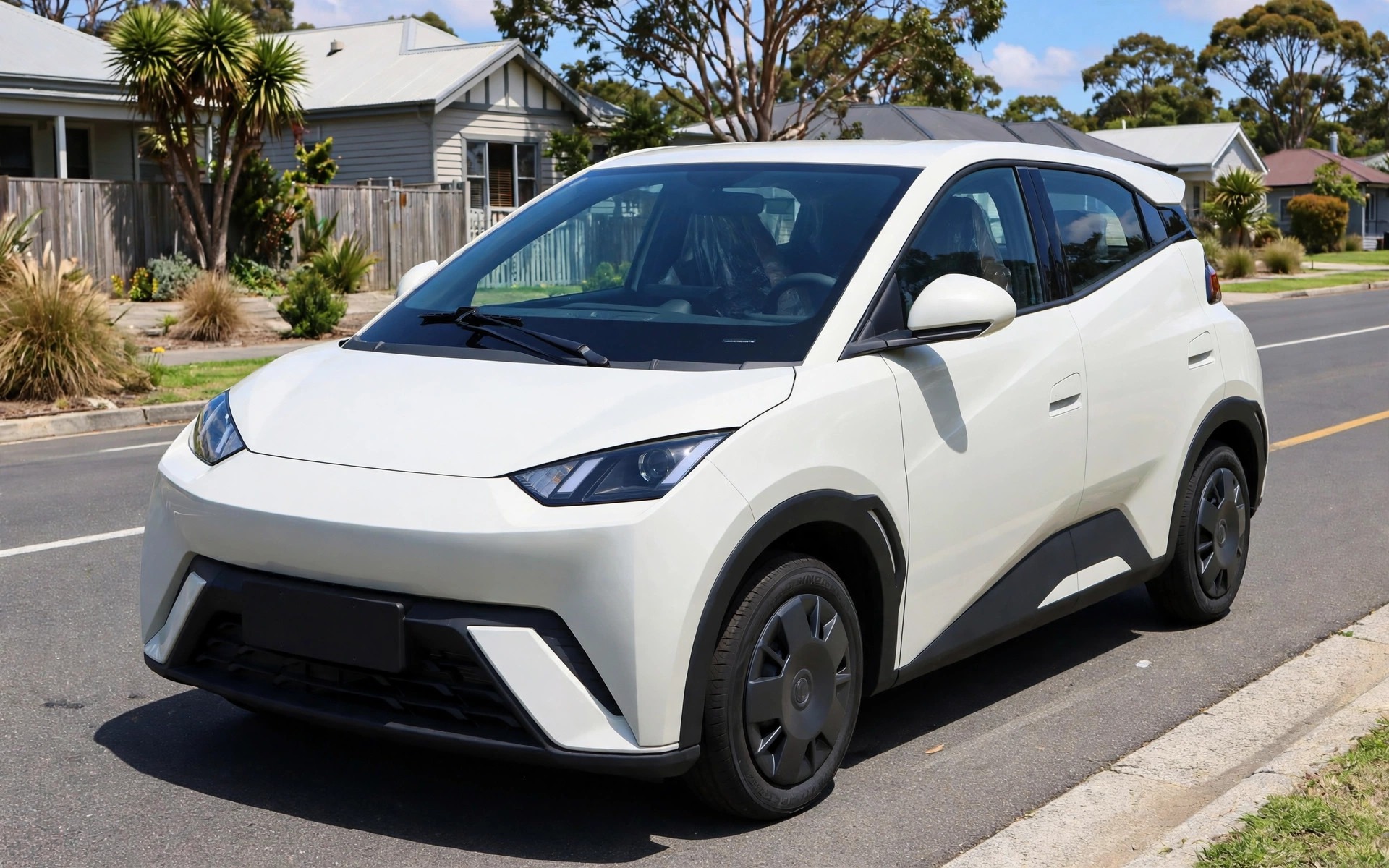

If you’re shopping for Australia’s cheapest new EV, you’ll meet it under three different names. In China it’s the BYD Seagull, in Europe the Dolphin Surf, in Latin America the Dolphin Mini — and in Australia it’s the BYD Atto 1, on sale since November 2025 and listed from $23,990 before on-roads. (At the time of writing in October 2026, BYD is promoting the Essential from AU$19,990 drive-away — order by 15 December and take delivery by 31 December 2026. Don’t confuse it with the bigger BYD Dolphin, a different car entirely.)
Scope note: items documented in Australia are stated as such; several items below are drawn from overseas (mainly UK) owner reports and are yet to be verified against Australian-delivered cars.
Below are eight quirks that real owners and reviewers keep bringing up — not deal-breakers for most, but exactly the things no brochure mentions. Each one is sourced: owner forums, long-term reviews, or the car itself.
1. The driver-attention camera scolds you for checking your mirrors
One of the most repeated complaints about this car worldwide is its hyperactive driver-monitoring system. Australian reviewer Riz Akhtar found even changing radio stations could trigger it on the Atto 1 Premium. New Zealand testers called the combination of the monitoring and erratic lane-centring “infuriating”. Ireland’s motorshow.ie reported the camera “had a go at me for simply checking my left side mirror and over-the-shoulder blind spots”. Autocar’s six-month UK long-term test of the Dolphin Surf rated the ADAS “among the most aggressive I’ve experienced”.
You can turn the monitoring down in the menus — but don’t assume the setting sticks. Both the European and Australian owner’s manuals say the fatigue/distraction warnings default back on every time you power up the car, and in Europe that’s also a regulatory requirement (the DDAW/ADDW systems must resume normal operation at each start). On the Australian car, switch the setting off, cycle the power, and check what actually survived.
Related reading: we dug into why driver-attention warnings false-alarm and what the regulations actually require, and which BYD driver-assistance alerts can actually be switched off.
2. No, the indicator stalk is not on the “wrong” side — but the tick can lag
Forum threads have some owners convinced the indicator stalk sits on the left of the column, carried over from left-hand-drive markets. For Australian-delivered cars, that’s a myth: the Australian owner’s handbook and delivery feedback confirm the stalk is on the right, as Australian drivers expect. The confusion seems to have started with overseas review cars.
What is real, from one Australian owner’s report (via CleanTechnica): the indicator sound sometimes lags about a second behind the stalk flick. Minor, but disorienting the first few times.
3. The charge port is on the right — awkward for kerbside charging
The charge-port door is on the car’s right front wing (confirmed in the owner’s manual). Owners on Whirlpool wish it were on the left for kerbside charging, and the UK review site Electrifying.com notes the placement means parking nose-first into charging bays. If your home setup or regular public charger favours the left side, factor in an extra shuffle.
4. It may refuse your Tesla portable charger
One Australian Atto 1 Premium owner reports his car won’t charge from a Tesla portable (Gen 2 mobile) connector — common in Australian garages — while working fine on a Tesla wall connector. A single-owner report, not a confirmed pattern, but if you’re counting on an existing Tesla mobile charger, test it before you rely on it. (Owner workarounds for public-charger handshake failures also surface occasionally in the UK owners’ group, though those reports are isolated.)
5. No frunk, no rear wiper, no one-pedal driving — and only four seats
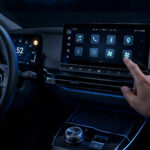
This is where the $23,990 price shows. Reviewers confirm: no front trunk (charge cables live in the main boot), a 308-litre boot with the seats up (1,037 litres folded), and only four seatbelts — no middle rear seat. There’s no rear wiper, so the back window collects grime. There’s no one-pedal driving mode either; as one test driver put it, you still have to use the brakes like it’s 2015. Other cost-cut details owners and reviewers have flagged: cup holders with no grooves (cans slide around), a small infotainment font, a steering column that adjusts for height only on the Essential (the Premium adds reach adjustment), no blind-spot indicators even on the Premium, no front parking sensors on either trim, and no rain-sensing wipers on the Essential.
6. Delivery day: count your keys
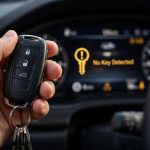
In the UK owners’ group, a post describes a dealer handing over two key fobs — one missing its silver top cap — and claiming “the spare is supposed to be like that; just swap the cap over when you need it”. The group was near-unanimous: that’s not normal, both fobs should be complete. One dealer added an unconfirmed wrinkle — that the base Active trim ships with one physical key plus a phone digital key. Either way, check both fobs at handover, test the NFC tap-to-unlock on the mirror (one Australian owner found his partner couldn’t get in despite granted access), and confirm the digital key works before you leave the lot.
7. The wireless charging pad can roast your phone
A 58-comment thread in the UK group: several owners report the wireless pad overheating phones badly enough to cause heat damage. The common workaround is to switch it off and use a cable (or treat the pad as a sunglasses tray). Reports are mixed — some owners have no issue at all, and phone model seems to matter — so treat this as “some owners”, not a universal fault. Notably, one owner’s dealer confirmed “this shouldn’t happen” and took the car in for inspection, so it’s worth raising rather than silently living with.
8. The reversing jingle is nearly inaudible
The Atto 1’s pedestrian warning sound while reversing is so quiet that multiple UK owners say they can’t hear it from the driver’s seat — one compared it to an ice-cream van tune, and another was stopped in a car park by a passerby asking for “a 99 Flake”. Nobody in the group found a volume setting in the menus. Whether that’s a safety concern or a feature depends on your neighbours, but don’t count on pedestrians hearing you. (Also missing: a boot light — one long-term owner’s only two complaints after 1,200 miles were the lack of a boot light and physical heater buttons.)
Worth knowing (not quirks, but ownership context)
- Service waits are real. One Australian owner reports 1–2 month waits for a basic service and warns of long parts lead times; Whirlpool members were already booking BYD services three months out in 2025. Factor this in if the Atto 1 will be your only car.
- The build-year saga (not the Atto 1 — but worth knowing as a BYD buyer). In July 2026, news broke that 1,265 Australian buyers’ cars were documented as 2026-built but actually manufactured in 2025. The named models were the Atto 3, Sealion 8 and Shark 6 — the Atto 1 was not among them. BYD first offered AU$1,100 compensation to buyers who kept their cars, then added a full-refund option after ABC News inquiries (BYD said the refund plan predated the coverage; the keep-the-car compensation was later raised to AU$3,500). Mechanically identical cars — but whatever BYD you buy, check your build plate and paperwork.
- Brazil’s suspension story (not Australia). Brazilian owners reported individual front suspension arm failures at mileages ranging from 24,000 to 73,900 km, and a petition over soft rear dampers has gathered over 800 signatures (signatories aren’t verified as owners). A cautionary tale about rough-road durability — but no equivalent arm failures have surfaced in Australia, and Australian reviewers describe the local car’s ride as soft rather than faulty. Included so you hear it here with context rather than as a scare story.
- Insurance costs are disputed. One ownership-cost blog claims insurance adds ~40% to five-year costs; an Australian owner rebutted with his actual $855/year premium versus the claimed $2,400. Get your own quote; don’t budget off either anecdote.
The bottom line
None of these quirks changes the core proposition: Premium owners report roughly 280–330 km of real mixed driving (against 310 km WLTP), the car drives zippily around town, and at $23,990 list — the Essential currently $19,990 drive-away on promotion — it’s priced against a Mazda 2, not against other EVs. But Australia’s cheapest EV is cheap in specific, tangible ways — the beeps, the stalk, the missing wiper. Now you know where the corners were cut, and you can decide which ones you can live with.
Sources
- Launch & pricing: Electrek, CleanTechnica (Nov 2025)
- Owner teething list (Dexter Pan, Atto 1 Premium): CleanTechnica (Feb 2026)
- Reviews: The Driven (Jun 2026), Drive Car Guide NZ, motorshow.ie, Electrifying.com, Autocar UK long-term
- Owner forums: Whirlpool – BYD Atto 1 (Seagull), mypitshop.com ownership reality
- FB owner groups (UK RHD): key thread, wireless-charging thread, reversing-sound thread — BYD Owners club UK (multiple owners reporting; exact post links not publicly traceable)
- Owner-problem roundup: autohled.cz
- News: Carscoops – build-year refunds (Jul 2026), autoevolution – Brazil suspension (Jul 2025)