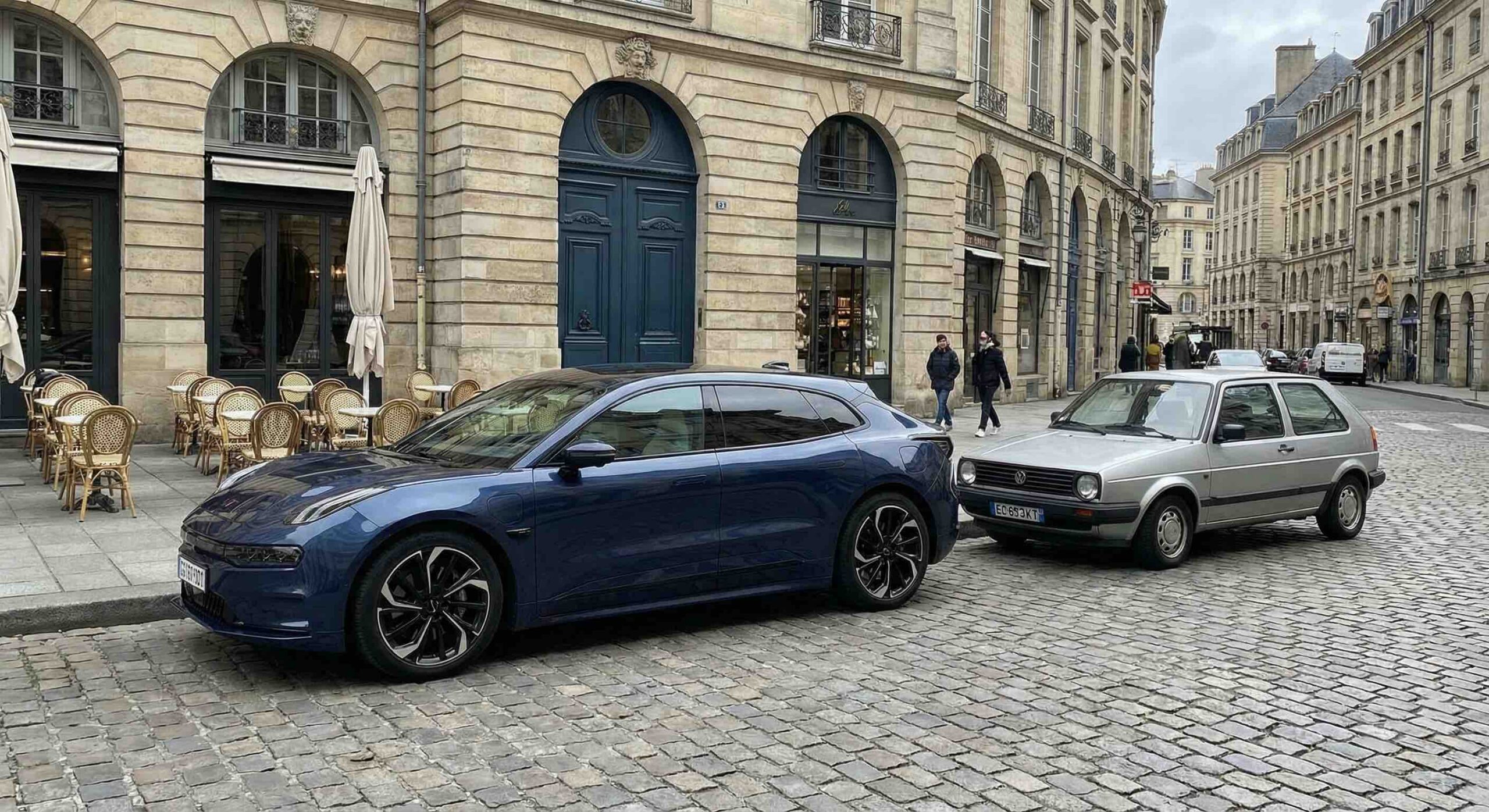

A Chinese Person Driving a Chinese Car Got Overtaken by a BMW on the German Autobahn
Honestly, I never thought I would do this: taking a Chinese shooting brake onto the German unlimited-speed autobahn and racing a BMW M3 Touring for a stretch. The result? It overtook me — but only just.
This is not me bragging about how fast the Zeekr 001 is. What I want to say is: this “Oriental shooting brake” from China genuinely qualifies to go toe-to-toe with the old players on this home turf of European wagons. That fact alone is magical enough.
Zeekr’s European journey started in 2023 with the Netherlands and Sweden, expanding to Norway, Germany, and France in 2024. I was lucky to get a brand-new 2026 Zeekr 001 in Stuttgart, driving it for three consecutive days — from city commuting to high-speed autobahn runs to mountain road carving. I wanted to figure out one thing: can this shooting brake, carrying Chinese brands’ overseas ambitions, truly move Europeans who are used to the Volkswagen Variant, the Mercedes C-Class wagon, even the Porsche Taycan Sport Turismo?
Compared With the Taycan Sport Turismo, Where Does It Fall Short?
First, a question European media love to ask: is the Zeekr 001 a “budget alternative” to the Porsche Taycan Sport Turismo?
Top Gear’s review headline says exactly that, and I was curious too. Putting the two cars side by side, the Zeekr 001 is longer and wider in dimensions — 4970mm long, 1999mm wide, a full circle larger than the Taycan Cross Turismo. Both share low-slung shooting brake lines from the side, but the Zeekr 001’s C-pillar is more sloped and its trunk opening is larger. On looks, I personally find the Taycan sexier — that full-width taillight and wide-body design are genuinely premium. But the Zeekr 001 is no slouch either, and the key point: it costs only one-third of the Taycan’s price.
Performance figures? The Taycan Turbo S does 0–100 in 2.8 seconds; the Zeekr 001 AWD version in 3.3. There is a gap, but not as big as you imagine. The key is daily driving: the Zeekr 001’s dual-motor tuning is more “civilian-friendly” than the Taycan’s — not every press of the accelerator makes you want to throw up. In Sport mode the power output is fierce enough; in Normal mode it is as gentle as a family car. This “best of both worlds” tuning is exactly the style Europeans like.
The chassis is where the real gap opens up. The Taycan’s air suspension and PDCC active anti-roll make it the most stable EV I have ever driven — bar none. The Zeekr 001? Its damping logic leans more toward comfort; for Germany’s truck-rutted autobahn surfaces, it handles them more softly than the Taycan. But if you carve mountain roads, body roll is noticeably greater. My personal judgment: if you spend 90% of your time commuting and 10% showing off, the Zeekr 001 is the better fit; if you hit the track every day, buy the Taycan — provided you have three times the money.
The Real Experience of 800V on European Charging Networks
This was the core test item of my European trip. The Zeekr 001’s headline is its “900V high-voltage architecture” — but China and Europe’s charging infrastructure are two completely different things.
Conclusion first: in Europe, the difference between 800V and 400V is much smaller than in China.
The reason is simple: Europe’s share of ultra-fast chargers is far lower than China’s. Most Ionity piles at German autobahn service areas are rated at 350kW — but whether your car can max them out depends on many factors: battery temperature, grid load, the number of cars charging simultaneously. I did a real-world test at an Ionity station outside Munich: the 95kWh Golden Battery version took 14 minutes to charge from 10% to 80%, with a peak power of 210kW — still a distance from the official “10.5 minutes to 80%” claim.
But is this Zeekr’s problem? No. At the same time, a Hyundai Ioniq 5 next to me could not reach 350kW either. The problem is that Europe’s charging network is not yet ready to serve 800V-plus models.
Interestingly, when I used a local ultra-fast charging station in Oslo, Norway, the situation was completely different. Norway’s grid is cleaner and its charging piles newer — I hit a peak power of 280kW. This shows the Zeekr 001’s 900V architecture is “overkill”: in most of Europe it can only deliver 60–70% of its capability. But think of it the other way: once Europe’s charging network finishes upgrading, the Zeekr 001 will be more desirable than today’s 400V models.
Now about the 103kWh Qilin battery version. This version supports 6C ultra-fast charging, theoretically with higher peak power. But most ultra-fast chargers in Europe are capped at 350kW, so the actual charging speed difference between the Golden battery and Qilin battery in Europe is not that big. My suggestion: if you are in Europe, the 95kWh Golden version is enough — spend the savings on more comfort options.
Shooting Brake vs Hatchback — Which Do Europeans Actually Buy?
I asked a German friend specifically about this question. He has driven a Volkswagen Passat Variant his whole life and also keeps a Golf hatchback at home. His answer surprised me: “A shooting brake? That’s a toy for rich people. We ordinary folks buy wagons or hatchbacks for practicality.”
This captures the real mentality of the European market. The term “shooting brake” itself carries an aristocratic air — originally British nobles’ horse carriages for carrying hunting rifles and game. Later borrowed by car brands, it always represented expensive, niche models: the Ferrari FF, the Mercedes CLS Shooting Brake. What the Zeekr 001 wants to do is break that “expensive” label — giving you a shooting brake silhouette at Model Y prices.
But Europeans’ hatchback attachment runs too deep. The Golf, the Focus, the Octavia… these compact cars are the mainstay of European families. They are cheap, easy to park, fuel-efficient. The Zeekr 001? Nearly 5 meters long, nearly 2 meters wide — parking it in Amsterdam’s narrow alleys is torture. I asked a few Dutch owners; their only reason for buying the Zeekr 001 was: it looks good. The shooting brake’s low-slung lines, big wheels, frameless doors genuinely turn heads on European streets.
So the Zeekr 001’s positioning in Europe is delicate: it wants to move the sentimentalists with the shooting brake identity, yet also wants to move pragmatists with value for money. These two groups are not necessarily the same people.
Against Same-Priced Rivals, Where Does Zeekr Win and Lose?
In Europe, the Zeekr 001’s most direct rivals are not the Taycan but the Tesla Model S, the BYD Han, and the upcoming MG Cyberster wagon version.
Vs the Model S: the Zeekr 001’s interior materials and craftsmanship are better. I appreciate the Model S’s minimalist style, but that vertical screen and the plasticky door panels do not match its price. The Zeekr 001 uses lots of Nappa leather and Alcantara; seat comfort completely beats the Model S. But the Model S’s Autopilot works better in Europe — Zeekr’s NZP highway navigation currently only supports Chinese highways. That is a real weakness.
Vs the BYD Han: the Zeekr 001 feels more like a “European car.” The BYD Han’s chassis tuning is soft, with obvious body roll in high-speed corners — Europeans would shake their heads. The Zeekr 001’s suspension is firmer and its steering more precise; it drives like a German car. I even suspect there are Germans on Zeekr’s chassis team. Also, the Zeekr 001’s brand image in Europe is younger and sportier than BYD’s.
Vs MG: MG is a “British brand” in Europe — although now owned by SAIC, older Europeans still have affection for MG. The MG4 sells very well in Europe: cheap and good to drive. But MG currently has no shooting brake model. The MG Cyberster wagon version is not yet on sale; if priced reasonably, it would be a rival to the Zeekr 001. But for now, the Zeekr 001 has almost no opponents in Europe’s electric shooting brake segment.
Three Days In, I’ve Fallen for It
Done with comparisons, let me talk about my real driving impressions.
Power: The AWD version’s 3.3-second 0–100 is enough. What I appreciate more is the quality of its power delivery. Many EVs jolt too hard off the line; the Zeekr 001 does not have this problem. In Sport mode, power is on tap without feeling out of control. Normal mode is as gentle as a 2.0T diesel wagon.
Chassis: This is where I give Zeekr the highest marks. It lacks the Porsche’s extreme combat feel, but has a just-right balance. Rock steady at 180 km/h on the autobahn; speed bumps in the city won’t make you question your life. The only complaint: slightly more body roll in mountain corners — but considering its size and weight, acceptable.
NVH: The Zeekr 001’s sound insulation is excellent. On the German autobahn I accidentally hit 220 km/h, and we could still chat normally inside the car. Wind and tire noise are kept at very low levels. The only noise source was a whistling from the side mirror — probably because I was driving too fast.
Space: As a shooting brake, the trunk is key. The Zeekr 001’s trunk exceeds 2000 liters with the rear seats folded — I stuffed in two bicycles plus a pile of luggage. The only complaint: the trunk opening is a bit high, inconvenient when loading heavy items.
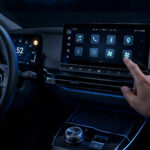
Smart cockpit: With the 8295 chip, the infotainment system runs smoothly. The 15.05-inch OLED center screen looks great — but the European version’s system is not fully localized yet; the voice assistant sometimes cannot understand my Chinese-accented German. Europeans are used to Android Auto and CarPlay, and the Zeekr 001 supports wireless connection — good marks for that.
The Shooting Brake Romance Needs Time to Ferment in Europe
After three days, my verdict on the Zeekr 001 is: an underrated good car.
In the Chinese market, the Zeekr 001 has to fight bloody battles with the Xiaomi SU7, Tesla Model 3, and BYD Han. But in Europe, it has few rivals. In the shooting brake segment, there used to be only “rich people’s toys” like the Porsche Taycan Cross Turismo. The Zeekr 001 delivers 80% of the experience at one-third of the price. For budget-conscious European middle-class buyers wanting something “different,” this car is very attractive.
But Zeekr’s road in Europe will not be easy. Europeans have decades, even a century, of affection for wagons and hatchbacks; the shooting brake is only a tiny niche. For Zeekr to shake this market with the “Oriental shooting brake” concept, it needs time, word of mouth, and more localization investment.
Personally, I think the Zeekr 001 will sell well in EV-friendly countries like Norway and the Netherlands. The German market needs more education — Germans are more conservative toward new brands, especially ones from China. But as long as Zeekr persists in localizing in Europe, building charging networks, and doing after-sales well, this car has a chance to become a dark horse in the European EV market.
As for the question in the headline — can the shooting brake romance defeat Europeans’ hatchback attachment? My answer: no need to defeat it; they can coexist. The Zeekr 001 does not need to become the Golf; it only needs to be the Zeekr 001.
This car made me rethink Chinese brands’ overseas strategy. I used to think Chinese cars going abroad was all about price wars, but the Zeekr 001 showed me another possibility: speak with product strength, find niche markets through differentiated positioning. This road is harder, but it has more dignity.
In the moment that BMW M3 Touring overtook me on the German autobahn, I did not feel embarrassed. On the contrary, I felt a bit proud: that a Chinese car could reach this level is already no small feat. Next time we meet, I’ll try Sport mode.
This article is based on real-world experience with the brand-new 2026 Zeekr 001 in the German/Norwegian markets. Some data references Zeekr’s European official website and Euro NCAP evaluation reports.