A “Dimensional Strike” on the MPV Market Is Underway.
In November 2025, the first mid-to-large MPV of the BYD Dynasty series — the Xia — entered the market at a subsidized starting price of 196,800 yuan. This price is a full notch lower than the Honda Odyssey in the same class, and even goes head-to-head with the Toyota Sienna. For a time, the entire MPV market was on edge.
But price is only the surface. What truly keeps joint-venture brands up at night is the killer weapon BYD has unleashed — the fifth-generation DM hybrid technology. How strong is this system exactly? Can it truly shake the reputation moat that Japanese hybrid MPVs have accumulated over the years? The answer lies in the collision of technology and the market.
When “Cheaper Than Fuel” Becomes the Norm
China’s MPV market was once the “stronghold” of joint-venture brands.
The Buick GL8 has ruled the business market for over twenty years; the Honda Odyssey and Toyota Sienna firmly controlled the family MPV discourse. Homegrown brands charged many times, mostly returning defeated. Not until the Denza D9 appeared did this situation get a crack — but the D9 is positioned at the high end with a hefty price; the real volume market — the 200,000–300,000 yuan range — remained the home turf of Japanese hybrids.
The arrival of the BYD Xia changed all of this.
Look at the data: the Xia starts at 249,800 yuan, dropping to 196,800 yuan after subsidies. The Honda Odyssey in the same class starts above 230,000 yuan, while the Toyota Sienna approaches 300,000. This means the Xia has delivered a “dimensional strike” on joint-venture MPVs at the price level.
But price is only the first cut. The truly fatal blow is the technological crushing.
The fifth-generation DM-i hybrid system in the Xia represents BYD’s latest achievement in the plug-in hybrid domain. The system’s core data is jaw-dropping: engine thermal efficiency as high as 46.06%, the highest in the world; fuel consumption as low as 4.9L/100km in battery-depleted mode (NEDC); combined range exceeding 1100 km. By comparison, the Toyota Sienna’s WLTC combined fuel consumption is 5.77L/100km, and the Honda Odyssey’s is also around 6L.
The gap is obvious. More importantly, as a plug-in hybrid, the Xia also offers pure-electric commuting capability — battery capacity up to 36.6kWh, pure-electric range up to 180 km (CLTC). For urban commuters, this means near-zero fuel consumption from Monday to Friday.
This is exactly the BYD Xia’s core logic: using the “cheaper than fuel” pricing strategy, stacked with the technological advantage of “plug-in crushing conventional hybrids,” launching a full assault on Japanese MPVs.
The “Black Magic” of Fifth-Generation DM
What Does 46.06% Thermal Efficiency Mean?
Engine thermal efficiency is the core metric for measuring hybrid system efficiency.
Traditional fuel cars usually achieve 35%–40% thermal efficiency, while Toyota’s hybrid system pushed it to around 41% through the Atkinson cycle and other technologies. This figure was once seen as the “ceiling,” because the laws of thermodynamics determine the efficiency limit of internal combustion engines.
But BYD achieved 46.06%.
How? The answer is the redesigned “plug-in-hybrid-dedicated high-efficiency engine.” The fifth-generation DM system uses an all-new combustion system architecture, including high compression ratio, high tumble-ratio intake ports, high-energy ignition systems, and a full set of technical solutions. Simply put, BYD squeezes every drop of fuel’s energy to the extreme.
The direct benefit: in battery-depleted mode — when the battery is drained and the vehicle relies entirely on the engine — the Xia’s fuel consumption can still stay around 5L. This figure already surpasses the Toyota THS hybrid system’s performance under equivalent conditions.
The Evolution of the EHS Electric Hybrid System
Besides the engine, the other major upgrade of fifth-generation DM is the EHS electric hybrid system.
The system uses a “dual-motor + single-speed reducer” structure, with the drive motor’s maximum power reaching 200kW (about 272 horsepower). This power level is equivalent to a V6 engine’s output. Media tests show that even with only 20% battery remaining, the Xia’s 0–100 km/h acceleration still breaks 9 seconds — 2 seconds faster than a fully loaded GL8.
More important is the motor’s response speed. Compared with engines that need to “rev up” to deliver maximum power, motors achieve millisecond-level torque response. This means in overtaking, merging, and other scenarios requiring rapid acceleration, the Xia performs more composedly than traditional hybrid MPVs.
A veteran automotive journalist commented after a test drive: “On highways, many plug-in hybrids suffer the embarrassment of ‘pedal to the floor, speed won’t climb.’ The Xia has no such problem at all — the motor’s power reserve is enough for any condition.”
DiSus-C: Fitting the MPV With “Smart Shock Absorbers”
Chassis technology has long been the weak point of homegrown cars. But the standard DiSus-C system across the Xia lineup is changing this perception.
The system’s principle is similar to “smart shock absorbers”: through solenoid valves, it adjusts damper damping in real time, achieving “rigid yet supple” chassis performance. Over speed bumps, the dampers instantly soften, cutting the jolt in half; in corners they automatically firm up, noticeably improving body roll.
For an MPV over 5.1 meters long and nearly 2.8 tons, this system’s value speaks for itself. The typical MPV use case is fully loaded with 7 people — high center of gravity, large inertia — where traditional suspension struggles to balance comfort and stability. DiSus-C solves this dilemma through active adjustment.
An owner vividly compared: “Driving an MPV used to feel like sailing a boat, wobbling around. With DiSus-C, I finally have confidence taking highway curves.”
Intelligent Driving: The Capability Boundaries of L2+
On intelligent driving, the Xia carries BYD’s latest “God’s Eye B — Assisted Driving LiDAR Edition” system. The system uses a LiDAR + camera fusion perception solution, enabling highway NOA (Navigation on Autopilot), automatic parking, remote parking, and other functions.
In real-world experience, the system’s performance can be described as “conservative but reliable.” Adaptive cruise, lane centering, blind-spot monitoring and other functions perform stably on highways and urban expressways — but in complex road conditions (such as narrow lanes or large-curvature curves), the system prompts the driver to take over rather than forcing intervention.
This “knowing when to refrain” strategy actually fits MPV users’ needs better — safety first, showing off second.
Head-to-Head With Japanese Hybrid MPVs
Price War: The Joint-Venture Brands’ Nightmare
If one word sums up the Xia’s market strategy, it is “value for money.”
By price range:
- 190,000–220,000 yuan: the Xia’s low-spec versions compete with the Honda Odyssey low-spec and Buick GL8 entry versions
- 230,000–270,000 yuan: the Xia’s mid-to-high-spec versions go head-to-head with the Toyota Sienna and GAC Toyota Granvia entry versions
- 280,000–310,000 yuan: the Xia’s top-spec versions touch the lower end of the Denza D9 and Buick GL8 plug-in hybrid versions
The brilliance of this pricing strategy: at the same price, the Xia’s configuration far exceeds rivals’; at the same configuration, the Xia’s price is a large notch lower.
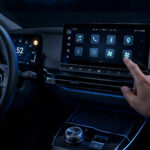
Take the smart cockpit as an example: the Xia comes standard with a 15.6-inch rotating center screen, dual 12.3-inch displays (driver + passenger), the DiLink intelligent system, rear entertainment screens, and other configurations. On joint-venture MPVs, these are often top-spec exclusives. But the Xia’s standard-across-the-lineup approach makes “entry-level equals high-spec” a reality.
Energy War: Plug-in’s Dimensional Strike on Conventional Hybrids
At the energy level, the competition between plug-in and conventional hybrids is essentially a competition between “two technology routes.”
Toyota’s THS and Honda’s i-MMD are both excellent hybrid systems, but they share one trait: no external charging. This means no matter how optimized, the engine must engage. Plug-in systems differ — with sufficient battery charge, the vehicle can run entirely in pure-electric mode, achieving “zero-fuel commuting.”
The Xia’s battery capacity is 36.6kWh, with a CLTC pure-electric range of 180 km. For urban commuting, this range covers over 90% of daily travel needs. At current electricity prices, the per-kilometer electricity cost is less than 0.1 yuan — one-third or even less of a fuel car’s.
Even in battery-depleted mode, the Xia’s performance is no slouch. Official data shows the Xia’s NEDC depleted-mode fuel consumption is 4.9L/100km. In media tests, this figure usually falls between 5.3–6.2L/100km — comparable to, even slightly better than, the Toyota Sienna’s real-world fuel consumption.
More critically, the Xia’s combined range exceeds 1100 km. With a full tank and full charge, you can drive from Beijing to Shanghai without refueling — a huge attraction for family trips and cross-province road trips.
Space and Comfort: The MPV’s Core Competitiveness
As an MPV, space and comfort are the core metrics. The Xia’s dimensions are 5145×1970×1805mm, with a 3045mm wheelbase. This figure is on par with the Toyota Alphard, a full circle larger than the Honda Odyssey.
In seating layout, the Xia uses a 2+2+3 seven-seat design, with independent captain seats in the second row supporting heating, ventilation, leg-rest adjustment, and even small tray tables. The third-row seats support split folding, forming a flat space when folded, with luggage capacity expandable to maximum.
Worth mentioning: the Xia’s third row is not “emergency seating.” Thanks to the over-3-meter wheelbase and taller roof, adults in the third row still enjoy decent head and leg room. One media test found that a 1.8-meter-tall adult sitting in the third row still had two fists of legroom.
This hits exactly the soft spot of Japanese MPVs. The Honda Odyssey’s third-row space has long been criticized for “insufficient leg support,” while the Toyota Sienna’s third row is “high floor, sitting like on a small stool.” The Xia’s arrival makes “comfort for all” in seven-seat MPVs possible.
Going Global: Chinese MPVs’ Global Ambitions
The Xia’s ambitions are not limited to the Chinese market.
In June 2025, BYD announced the Xia would enter overseas markets as the “BYD M9,” with Mexico as the first stop. The first batch of 500 vehicles has completed export, marking Chinese-brand MPVs’ official start of their globalization journey.
For emerging markets like Southeast Asia and Latin America, high price sensitivity and low running costs are the core demands. The Xia’s plug-in hybrid technology fits these needs perfectly: pure-electric for urban commuting, fuel for long-distance travel, no range anxiety.
More critically, the Xia’s price advantage is even more pronounced overseas. Take Mexico as an example: the Toyota Sienna in the same class starts at about USD 40,000 (about 280,000 yuan), while the BYD M9 is expected to be priced around USD 30,000 (about 210,000 yuan) — a price gap of nearly 30%.
This price gap is enough for the BYD M9 to spark a “value-for-money revolution” in overseas markets.
Can the Xia Win?
Strengths Summary
Reviewing the BYD Xia’s core strengths, they can be summarized as “three leads”:
Technology lead: the fifth-generation DM-i hybrid system comprehensively surpasses Japanese hybrids in thermal efficiency, fuel consumption, range and other core metrics; DiSus-C active suspension elevates MPV ride quality.
Configuration lead: smart cockpit, rear entertainment, L2+ assisted driving and other configurations are standard across the lineup — the sincerity of “entry-level equals high-spec” moves consumers.
Price lead: the 196,800-yuan starting subsidized price drives directly into joint-venture MPVs’ heartland, forming the “cheaper than fuel” competitive posture.
Potential Challenges
Of course, the Xia is not without weaknesses.
Brand perception: compared with Toyota and Honda’s deeply cultivated brand images, BYD’s recognition in the MPV market still needs accumulation. The Denza D9’s success proves BYD can build high-end MPVs — but whether the Dynasty series’ Xia can continue this reputation still needs market verification.
NVH performance: media reviews generally note the Xia still has room for improvement in wind and tire noise control at high speeds. Compared with the Buick GL8’s “quiet king” image, the Xia’s NVH is at a “passing-plus, not-yet-excellent” level.
Resale value: new energy vehicles’ resale values are generally lower than traditional fuel cars, and plug-in hybrids are no exception. For users who plan to “drive a few years then sell,” this is a factor to weigh.
Market Forecast
Overall, the BYD Xia is a “sincere” product. It uses technological strength and price advantage to launch a head-on challenge to joint-venture MPVs.
From sales data, the Xia’s performance is already showing results. From January to May 2025, the Xia delivered 14,962 units cumulatively, gaining a firm foothold in the mid-to-large MPV market. With the 2026 model launch and overseas market expansion, this figure is expected to climb further.
Can it “steal the Odyssey’s business”? The answer: partially yes, but full disruption needs time.
The Odyssey’s core users are “Honda fans” and family users — this group’s brand loyalty is high and will not shift en masse in the short term. But for those “on the fence” consumers, the Xia undoubtedly offers an extremely attractive new choice.
More importantly, the Xia’s arrival broke the joint-venture MPVs’ “lying flat and winning” situation. When price is no longer the moat and technology no longer the gap, consumers can finally vote with their feet and choose products that are truly “worth the money.”
This is the BYD Xia’s greatest value — it brought the MPV market into the “involution era” and gave Chinese consumers the right to more choices.
Buying Advice
If you are considering buying an MPV in the 200,000–300,000 yuan range, the Xia deserves a top spot on your shortlist:
- Mainly urban commuting: 180km pure-electric range covers daily travel; per-kilometer cost under 0.1 yuan
- Frequent family trips: 1100km combined range, comfortable seven-seat space, meeting the whole family’s travel needs
- Value for money: entry-level-equals-high-spec sincerity, unmatched at the same price
Of course, if you are a “Honda fan” or “Toyota fan” with brand attachment, the Odyssey and Sienna remain safe choices. But at the very least, go test drive the Xia — experience the progress of Chinese-brand MPVs; it might change your mind.
The wheels of the era roll forward. The rise of Chinese-brand MPVs has only just begun.