
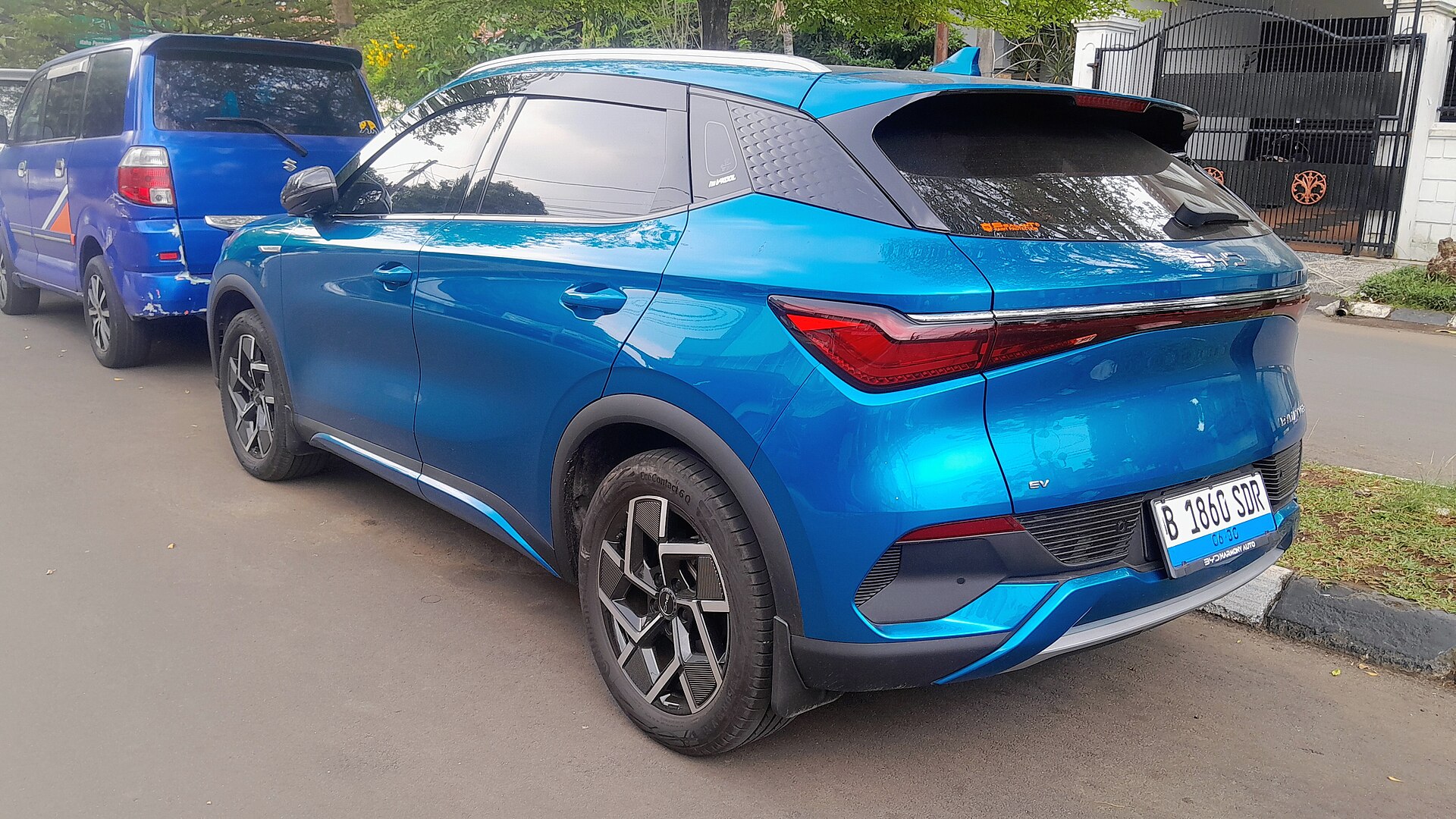

This week in the BYD Owners Club UK Facebook group, an owner posted that after a ten-day holiday, her 2023 Atto 3’s 12V battery was completely flat — the car would power on but refuse to power off. Roadside assistance jump-started it and, in their words, declared the auxiliary battery had “gone.” That’s one owner’s report with an unconfirmed cause. BYD’s manual also describes a dormant state after long-term parking, which can make the car unreachable without proving the battery has failed.
Swapping the battery is the easy part. The expensive part is swapping it before knowing which kind of “dead” you’re dealing with. Get that wrong and you pay for a new battery that doesn’t fix the problem. So this guide is built around one idea — diagnose first, wrench later.
Quick refresher: what the 12V battery actually does in your Atto 3
Your Atto 3’s big blade battery moves the car, but it can’t wake itself up. The humble 12V battery powers the computers, locks, lights and the contactors that connect the high-voltage pack. While driving, the car tops it up automatically through a DC-DC converter; the owner’s manual also documents intelligent charging while parked. When the 12V is unhealthy, the symptoms can look like almost anything else — which is exactly why guessing is dangerous.
Some owners report early 12V failures, with individual posts often mentioning around 18 to 24 months of service. Those are anecdotal reports — they don’t establish an expected lifespan. Worth keeping in mind as your car ages, not worth treating as a schedule.
Step 1: Figure out which kind of “dead” you have
There are three distinct states, and only one of them means buying a new battery.
Type A — Dormant (the battery is sleeping, not dead)
The owner’s manual says a vehicle parked for a long time may enter a dormant state, in which the smart key can’t find the car at all. The fix is free: hold the key close to the driver’s door and press the micro-switch on the door handle to wake the battery. If that fails, the battery may be exhausted. This comes straight from the BYD 2024 EU owner’s manual (right-hand-drive edition), not from a forum trick — and it’s worded exactly as carefully as that: “may.”
Try this first — especially after a holiday or long business trip.
Type B — Flat (recoverable)
Avoidable loads can contribute to parked-battery drain. Check for lights or accessories left on. BYD’s 2022 Australian manual warns that leaving the V2L connector attached with no output increases the vehicle’s static power consumption, but does not identify it as a confirmed cause of 12V battery failure. Repeated app wake-ups are owner-reported hypotheses, not an established cause. If a jump-start is performed under professional guidance and the battery is healthy, it bounces back — once the car is awake, the DC-DC converter takes over. One Malaysian owner’s forum post measured about 13.8V on the bus after a successful jump; that’s a single owner’s measurement, not a factory specification.
If you jump-start, know this: the Atto 3’s positive jump terminal sits inside the power distribution box (PDB) under the bonnet, and it’s cramped. The owner’s manual recommends having a professional do the jump-start because of the limited space and circuit risks. The assisting vehicle must be 12V, getting the lead order wrong risks a short, and if several attempts fail — call your BYD dealer. One thing the manual is blunt about: never use your Atto 3 to jump-start another car. It can damage the low-voltage battery.
Type C — Dead (time to replace)
Repeated discharge — going flat again days after a jump, or refusing to accept a charge — is a reason to have the battery tested and the cause investigated, not proof on its own: a parked drain or a charging fault can discharge a perfectly good battery too. Only a proper test confirms the battery itself is done. Owners on Geekzone and Clean Energy Reviews describe the familiar pattern — one jump, one more jump, then a test that settles it.
Diagnostic checklist, in order:
- Try the door-handle wake (rules out dormancy — free, 30 seconds).
- If the door-handle wake-up fails, contact BYD roadside assistance or an authorised service provider to assess the low-voltage system. If jump-starting is appropriate, use the procedure and equipment specified for your vehicle’s market and build, under professional guidance.
- Only if it keeps dying: a voltage or load test to confirm it can’t hold a charge — then replace.
Step 2: Get the right battery
This is where people get tripped up, because there isn’t one universal answer — and guessing the chemistry wrong can cause real trouble.
- Read the label on your existing battery, then match by VIN. The owner’s manual doesn’t specify chemistry, capacity or size — the 2022 Australian edition just says “lead-acid.” Meanwhile, BYD’s 2025 model-year update for India introduced an LFP 12V battery. AGM is frequently suggested on forums, but forum recommendations don’t establish that AGM is approved for every Atto 3. Match the replacement to the specification for your VIN — chemistry, size, capacity, terminal layout and required fitment — and use AGM only if BYD or a qualified battery fitter confirms it for that vehicle.
- Size and location vary. Australian retailers list B20/NS40-class batteries (35–45Ah) for the Atto 3, but check terminal type and layout — some owners found the skinny JIS terminals needed an adapter. The battery sits in the engine bay next to the PDB on many builds, but newer cars can differ: some owners report the low-voltage battery located under a rear seat. Confirm location and procedure in the manual for your exact market and build, or by VIN — don’t assume.
- Budget (dated, market-specific): an Australian guide updated July 2026 puts aftermarket AGM units at roughly AU$160–320 and the genuine part at AU$450+ (evparts4x4). In Singapore, a seller’s promotional listing (October 2026, Carousell, before GST) offers an OEM replacement with installation and the seller’s one-year warranty at about S$110. Treat these as dated market snapshots, not a price list.
Step 3: Have it replaced properly
Here’s an honest caveat: the 2024 RHD owner’s manual gives low-voltage safety precautions but no complete battery-replacement procedure. Have a BYD-authorised dealer or qualified EV technician identify and replace the battery using the procedure for your VIN and build. Do not carry out electrical work during intelligent charging.
Two things from the manual worth repeating: the low-voltage battery contains an intelligent control module, so don’t disassemble it except in an emergency; and if anything looks odd after the swap, stop and call the dealer rather than improvising.
One third-party tip, clearly labeled as such: an Australian guide suggests using an OBD2 scanner to reset the battery-management data after an Atto 3 replacement. The 2024 RHD Atto 3 owner’s manual doesn’t require this — but reset requirements vary by vehicle, so verify against the manual for your own car, or have a qualified technician confirm.
Step 4: The pitfalls owners actually hit
Don’t let the 12V take the blame for something else. In Malaysia, an owner reported (via SoyaCincau, May 2025) that after his ten-month-old Atto 3 threw a “Power System Failure” and locked its wheels on the highway, the service centre said the battery needed replacement and quoted RM418. The owner later said the eventual diagnosis was a faulty driver-door sensor, and that BYD’s local distributor agreed to a buyback settlement — BYD had not issued an official statement at the time. If your symptoms are weird — sudden braking, random warnings, steering assist dropping out — a battery swap isn’t a diagnosis. The 12V isn’t always the villain.
Check your warranty terms before paying. At the time of that Malaysian report, BYD Malaysia covered the lead-acid 12V for 1 year/20,000 km — a fraction of the high-voltage pack’s 8 years/160,000 km. (That owner’s car was already past 20,000 km.) European and Australian terms may differ — check your local warranty booklet; don’t copy one market’s numbers onto another market’s invoice.
A lithium jump pack may be useful backup equipment — but have a professional confirm compatibility and use it only under the vehicle-specific procedure.
Two small habits owners report: unplug the V2L adapter when you’re not using it. Some owners report keeping the key away from the car to reduce unwanted wake-ups; any benefit to 12V battery life is unconfirmed.
The one thing to remember
When the car is unreachable, try the manual’s door-handle wake. If that fails, follow the guidance for your market and build, and have the cause checked before replacing parts. Have the replacement handled by a BYD-authorised dealer or qualified EV technician; access and procedure vary by build.
Related reading: if the car won’t even recognize your key, start with our key-not-detected checks (the diagnosis-first habit applies there too). And if your MG4’s cabin soundtrack is driving you mad, here’s how to turn off the overspeed warning beep.
Photo: © VulcanSphere / Wikimedia Commons / CC BY 4.0



[…] BYD’s own service guidance suggests trying the key near the driver’s door first. Our Atto 3 12V battery guide walks through the full check. Second, if the car powers on normally and only the display stays […]